
High-quality video streaming has become a cornerstone of modern communication, powering everything from live sports broadcasts and online classes to global corporate events. At the heart of this technology is a crucial piece of hardware or software: the IP streaming encoder. Without it, delivering smooth, reliable video content over the internet would be nearly impossible.

IP streaming encoders help convert video signals into digital streams that can be transmitted efficiently across networks. They are the essential link between your camera or video source and your audience’s screens, ensuring that every frame is delivered with clarity and minimal delay. Understanding how these devices work and what features to look for is vital for anyone involved in IPTV, live event production, or digital broadcasting.
This guide explores the world of IP streaming encoders, from their core functions and key technologies to the best models available on the market. By the end, you’ll have the knowledge to select the perfect encoder for your specific needs, whether you’re launching an IPTV service, streaming a church service, or setting up digital signage for your business.
How IP Streaming Encoders Work
The primary job of an IP streaming encoder is to take a raw video signal and prepare it for transmission over an IP network, like the internet. This process involves a few key steps:
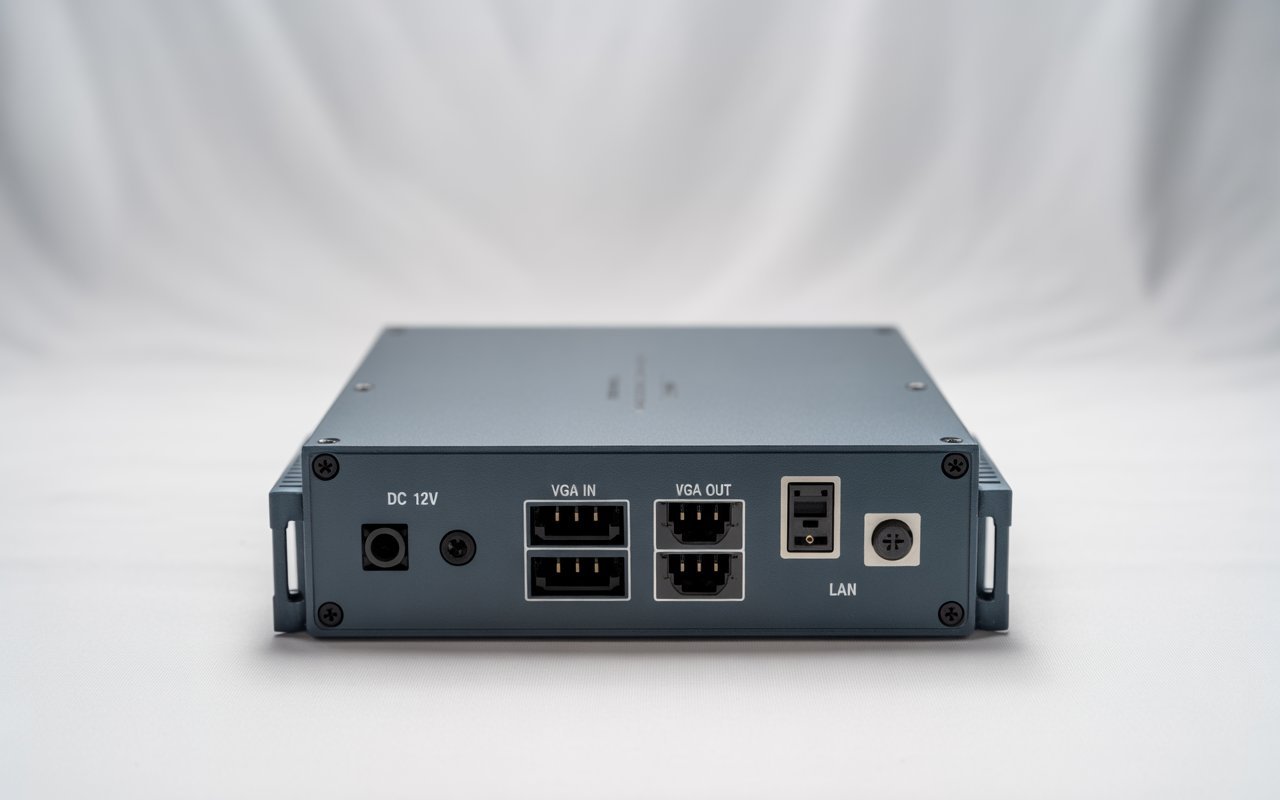
- Signal Input: The encoder receives a video signal from a source such as a camera, computer, or satellite receiver. This input is typically delivered via an HDMI, SDI, or CVBS connection.
- Compression (Encoding): Raw video files are incredibly large, making them impractical for streaming. The encoder compresses the video data using a codec (coder-decoder) like H.264 (AVC) or H.265 (HEVC). This process significantly reduces the file size while preserving as much visual quality as possible.
- Packaging (IP Stream): The compressed video is then packaged into a specific streaming protocol. This protocol acts as a set of rules for how the data should be sent, received, and reassembled by the viewer’s device.
Modern IP streaming encoders support multiple streaming protocols to ensure compatibility across different platforms and devices. Key protocols include:
- RTMP (Real-Time Messaging Protocol): Once the standard for live streaming to platforms like YouTube and Twitch, RTMP is still widely used for ingesting video from the encoder to the streaming platform.
- HLS (HTTP Live Streaming): Developed by Apple, HLS breaks the video into small chunks and delivers them over HTTP. Its adaptability makes it great for reaching a wide audience on various devices, including mobile.
- SRT (Secure Reliable Transport): An open-source protocol that excels at delivering high-quality, low-latency video over unpredictable networks. It’s quickly becoming a favorite for professional broadcasters.
- IPTV Multicast: This protocol is designed for efficiently delivering a single stream to multiple recipients on a local network, making it ideal for IPTV systems in hotels, hospitals, and corporate campuses.
Hardware vs. Software Encoders
Encoders come in two main forms: hardware and software.
- Hardware Encoders: These are dedicated physical devices built for one purpose: encoding video. Because all their processing power is focused on this single task, they offer superior performance, lower latency, and greater reliability. They are the standard for professional broadcasting and 24/7 streaming operations.
- Software Encoders: These are applications that run on a computer, like OBS Studio or vMix. They are flexible and cost-effective, but their performance depends on the computer’s processing power. Software encoders are a great option for smaller-scale streams or beginners, but they can be less stable than their hardware counterparts.
Types of IP Streaming Encoders
Different streaming applications require different types of encoders. Here’s a breakdown of the most common categories.
HDMI to IP Streaming Encoders
These are the most common and versatile encoders. They take a standard HDMI input from sources like cameras, laptops, or media players and convert it into an IP stream. They are perfect for live events, presentations, and general-purpose streaming.
4K IP Streaming Encoders
As viewer expectations for quality rise, 4K streaming is becoming more common. 4K IP streaming encoders are designed to handle the massive amount of data associated with Ultra HD resolution (3840×2160). They often use the more efficient HEVC/H.265 codec to manage the required bandwidth.
HEVC/H.265 Encoders
HEVC (High-Efficiency Video Coding), or H.265, is a compression standard that is up to 50% more efficient than its predecessor, H.264. HEVC encoders can deliver the same video quality at half the bitrate, making them essential for 4K streaming and for broadcasting over limited-bandwidth networks.
Multi-Channel IPTV Encoders
These powerful units are designed for IPTV headends. A single multi-channel encoder can ingest multiple video sources (e.g., from satellite receivers or broadcast cameras) and encode them into separate IP streams simultaneously. This is ideal for creating a lineup of TV channels for distribution over a local network.
Key Features to Look For in IP Streaming Encoders
Choosing the right IP streaming encoders depends on the features you need for your specific application. Here are the most important factors to consider:
- Video Quality: Look for support for the resolutions and codecs you need, such as 4K, 1080p, and HEVC/H.265.
- Input Options: Ensure the encoder has the right inputs for your video sources, whether it’s HDMI, SDI (for professional cameras), or CVBS (for older analog equipment).
- Network Output Formats: Check for support for the protocols you plan to use, like RTMP, HLS, SRT, or IPTV multicast.
- Latency Performance: Latency is the delay between when an event happens and when viewers see it. For interactive streams, look for encoders that offer low or ultra-low latency.
- Multi-Bitrate Streaming: This feature allows the encoder to send out multiple versions of your stream at different quality levels. The viewer’s player can then automatically select the best stream for their internet connection, ensuring a smooth playback experience.
- Audio Support: Confirm the encoder supports the audio formats you need, such as AAC or MP3, and has the necessary physical inputs (e.g., 3.5mm jack or embedded HDMI audio).
- Remote Management: A web-based interface for remote configuration and monitoring is essential for managing encoders installed in hard-to-reach locations.
- Licensing & Firmware Updates: Some features may require paid licenses. Also, check that the manufacturer provides regular firmware updates to fix bugs and add new capabilities.
Best IP Streaming Encoders in 2025
The market for IP streaming encoders is vast. Here is a look at five top contenders that cater to different needs and budgets.
Vela / Vecaster 4K HEVC Encoder
- Overview: The Vela series (formerly Vecaster) offers a range of powerful yet affordable encoders. Their 4K HEVC models are particularly popular for their ability to deliver high-quality streams with excellent compression.
- Ideal Users: Content creators, small-to-medium-sized broadcasters, and IPTV providers looking for a cost-effective 4K solution.
- Analysis: These IP streaming encoders strike a great balance between performance and price. They support multiple protocols and are known for their reliable 24/7 operation, making them a solid choice for a variety of applications.
PVI Encoders (ProVideo Instruments)
- Overview: ProVideo Instruments specializes in multi-channel encoders for IPTV and professional broadcasting. Their units are built for high-density environments and are praised for their stability and ease of use.
- Ideal Users: IPTV providers, hotels, stadiums, and corporations that need to distribute a large number of TV channels over a network.
- Analysis: PVI focuses on reliability. Their encoders are rock-solid and come with features like IPTV multicast support and remote management, which are critical for large-scale deployments.
Haivision Makito Series
- Overview: The Haivision Makito series is a top-tier choice for broadcast professionals. These encoders are renowned for their ultra-low latency and pioneering support for the SRT protocol.
- Ideal Users: Professional broadcasters, military and government agencies, and anyone who needs carrier-grade performance and security.
- Analysis: If your priority is low latency and reliability over challenging networks, the Makito X4 is hard to beat. This premium IP streaming encoder is an industry standard for a reason, though its price reflects its performance.
Kiloview Encoders
- Overview: Kiloview offers a wide array of encoders with innovative features like NDI support, which allows video to be shared over a standard Ethernet network. They are flexible and integrate well into modern IP-based workflows.
- Ideal Users: Live production houses, esports broadcasters, and churches that use NDI-based production systems.
- Analysis: Kiloview encoders are known for their versatility. Their extensive protocol support and features like NDI make them a forward-thinking choice for anyone building a modern, flexible streaming setup.
Magewell Ultra Stream
- Overview: The Magewell Ultra Stream series is designed for simplicity. These compact boxes allow users to start streaming to platforms like YouTube or Twitch with minimal setup, often with just the push of a button.
- Ideal Users: Content creators, educators, and anyone who needs a user-friendly, plug-and-play streaming solution.
- Analysis: Magewell prioritizes ease of use. The Ultra Stream is less about deep technical configuration and more about getting a high-quality stream online quickly and easily.
IP Streaming Encoders for IPTV Services
IPTV providers have unique requirements. Their systems must run 24/7 without interruption, delivering dozens or even hundreds of channels to subscribers. For IPTV systems, IP streaming encoders must support multicast broadcasting.
- Unicast: A separate stream is sent from the server to each individual viewer. This is how most internet streaming works, but it consumes a lot of bandwidth when many people on the same network watch the same content.
- Multicast: A single stream is sent out onto the network, and multiple viewers can “tune in” to it. This is far more efficient for delivering live TV channels within a closed network like a hotel or corporate campus.
A typical IPTV setup involves multi-channel encoders that take feeds from satellite dishes or other sources, encode them, and transmit them as multicast streams over the local network. Set-top boxes at each TV then join the appropriate multicast group to display the selected channel.
Common Problems & How to Fix Them
Even the best encoders can run into issues. Here are some common problems and quick troubleshooting tips:
- Overheating: Encoders generate a lot of heat. Ensure proper ventilation and avoid stacking them. If an encoder overheats, it can become unstable or shut down.
- Network Latency Issues: If your stream is choppy, the problem might be your network, not your encoder. Use a protocol like SRT to handle packet loss and jitter on unreliable connections.
- Incorrect Bitrate Settings: Setting the bitrate too high for your network’s upload speed will cause dropped frames. Run a speed test and set your total bitrate to about 70% of your available upload bandwidth.
- Poor Audio/Video Sync: This can often be traced back to the source. However, some encoders offer audio delay settings to help you re-sync the audio and video.
- Firmware Problems: Always keep your encoder’s firmware up to date. Manufacturers regularly release updates that fix bugs and improve performance.
How to Choose the Best IP Streaming Encoder
With so many options, picking the right encoder can feel daunting. Use this table to guide your decision based on your primary use case.
| Use Case | Key Features to Prioritize | Recommended Encoder Types |
|---|---|---|
| IPTV Providers | Multi-channel, IPTV multicast, 24/7 reliability, remote management | Multi-Channel IPTV Encoders (e.g., PVI) |
| Content Creators | Ease of use, direct streaming to platforms, good value | HDMI to IP Encoders (e.g., Magewell, Vela) |
| Churches & Live Events | Reliability, ease of use, multiple protocol support | HDMI to IP Encoders, NDI Encoders (e.g., Kiloview) |
| Businesses | Remote management, low power consumption, digital signage features | Compact HDMI or Multi-Channel Encoders |
| Professional Broadcast | Ultra-low latency, SRT support, carrier-grade reliability | High-End Encoders (e.g., Haivision Makito) |
Invest in the Right Encoder for Flawless Streaming
Selecting the right encoder is a critical investment that directly impacts the quality and reliability of your video streams. Whether you need a simple, plug-and-play device for streaming to YouTube or a powerful multi-channel unit for a large IPTV system, the options are plentiful.
By understanding the core technology, evaluating key features, and comparing the top models, you can make an informed decision. Taking the time to choose the right model will pay dividends in the form of a stable, high-quality stream and a better experience for your audience. A successful broadcast begins with the right IP streaming encoders, so choose wisely.